
 Products Of The Month
  Online Catalog
  Bottle Designer
 Bottle Design
Neck finishes and pump compatibility
- 24 Sep 2026
A neck finish is the part of a bottle a closure attaches to. It is described by a code such as 18/410 or FEA 15, and that code is the only reliable way to know whether a pump will fit a bottle.
This page explains what the numbers mean, lists the finishes used in fragrance and cosmetics, and answers the question that brings most people here: why a pump will not open, and how to release it without breaking anything.
Reading a screw neck code
A screw finish is written as two numbers separated by a slash, for example 18/410.
What the two numbers mean
The first number is the outside diameter of the neck in millimetres, measured across the threads. An 18 finish is 18 mm across.
The second number identifies the thread style and the neck height. It is not a measurement. The common styles in cosmetics are:
400, a single thread with a shorter neck and a wider opening relative to height. 410, a single thread with a taller neck than 400 at the same diameter. 415, a single thread taller again than 410. 425, a double thread, used where fast closing matters.
This is why 18/410 and 18/415 are not interchangeable even though both are 18 mm. The diameter matches, the neck height and thread profile do not. A pump specified for one will either sit too high or fail to seal on the other.
Finishes used in fragrance and cosmetics
| Finish | Typical use | Notes |
|---|---|---|
| FEA 15 | Fine fragrance sprayers | Crimped, not removable |
| 15/415 | Screw neck perfume, refillable | Threaded alternative to FEA 15 |
| 18/410 | Lotion pumps, mist sprayers | Very common in skincare |
| 18/415 | Serum and oil bottles | Taller neck than 18/410 |
| 20/410 | Mist sprayers, small pumps | Common in toners and mists |
| 24/410 | Cream pumps | Higher output than 18 mm |
| 28/410 | Lotion and trigger pumps | Large output, body care |
Crimp finishes and FEA 15
Crimp finishes work differently from screw finishes. On an FEA 15 neck the pump is clamped in place with a crimping tool and is not designed to be removed. That is deliberate: it makes refilling and tampering difficult, which is why fine fragrance uses it.
Erbatur pump and collar ranges are listed by size on the pump and collar page, split into pumps with collar and pumps without collar. Plastic sprayers and lotion pumps are on the plastic sprayers page and the lotion pump subpage.
Dosage per stroke
Neck size and pump type together determine how much product comes out per press.
Atomiser, cream pump and lotion pump doses
Fragrance atomisers deliver a fine mist in a small dose, typically well under a tenth of a millilitre per stroke. That is what makes a 50 ml bottle last months.
Cream pumps on a 24 mm neck deliver considerably more, sized for a facial cream dose.
Lotion pumps on 28 mm necks deliver the largest doses, sized for body care where a single press should cover an arm.
Dosage matters most in small bottles. Fitting a standard pump to a 5 ml travel bottle means each press consumes a noticeable share of the contents. Small formats need a lower output pump.
Dip tube length
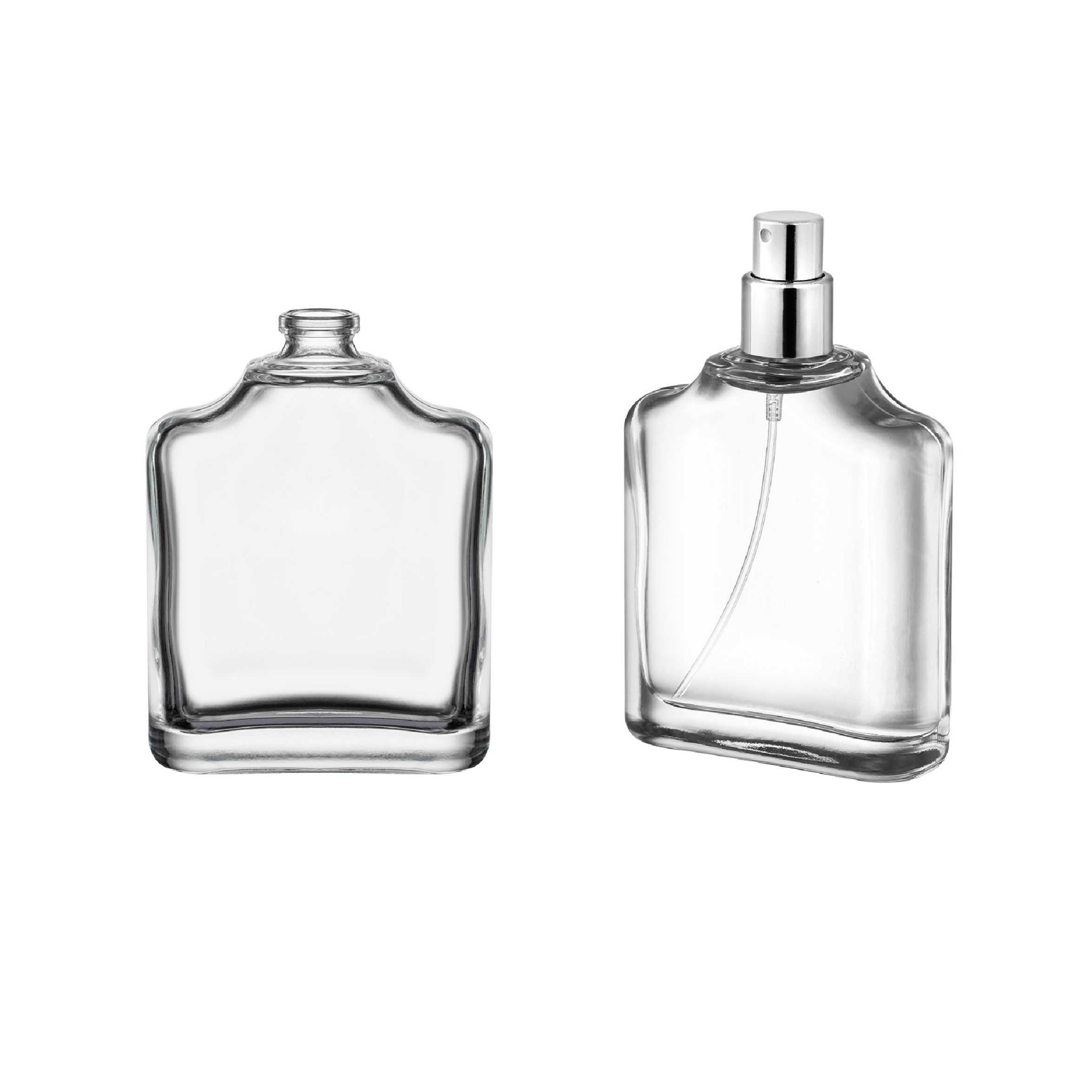
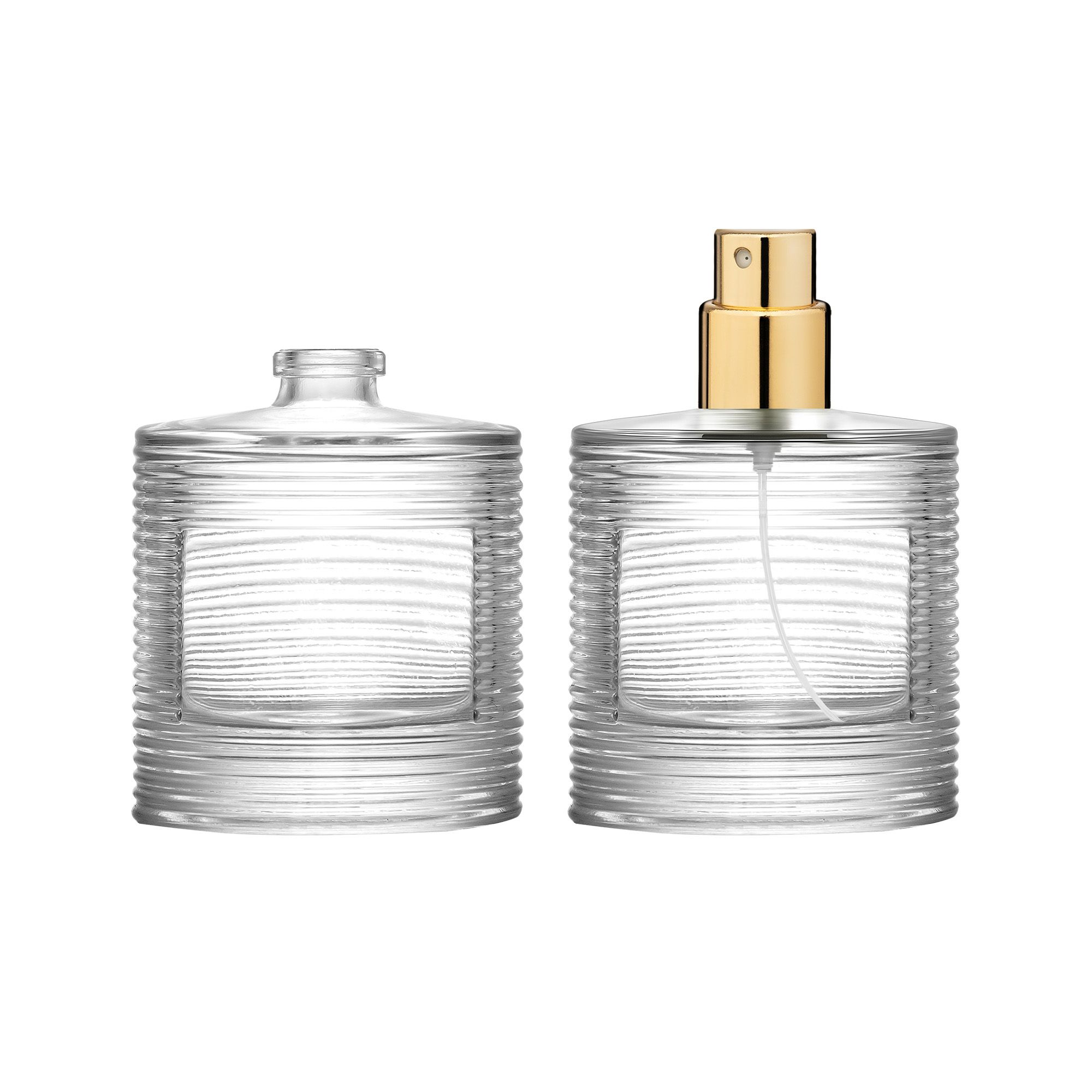
The dip tube is the plastic straw that reaches from the pump into the liquid. It has to be cut to the internal height of the specific bottle.
A tube that is too short leaves product stranded at the bottom, and customers notice. A tube that is too long bends against the base and can restrict flow or prevent the pump from seating.
When you order pumps and bodies from different suppliers, dip tube length is the specification that most often gets missed. Send the bottle drawing with the pump order.
How to open a lotion pump
Most lotion and cream pumps ship in a locked position so they do not discharge in transit. There are three common locking systems.
Three locking systems
Twist to unlock. Hold the bottle and turn the pump head anticlockwise until it rises. Some pumps need a firm quarter turn before the head releases.
Press down and twist. Push the head down first, then turn. The head pops up once the lock releases.
Clip or collar lock. A small plastic clip sits under the head, or a collar has to be lifted. Remove the clip and the pump works.
Priming a new pump
If the head rises but no product comes out, the pump simply needs priming. Press it repeatedly, six to ten times, until the tube fills. A new pump always needs this.
If the head will not move at all, check whether dried product has sealed the gap around the stem. Wipe the join with a cloth dampened with warm water, wait a minute and try again.
Never lever a pump head off with a knife or pliers. On a crimped fragrance neck this permanently damages the rim and the bottle can no longer seal. Advice for stuck perfume caps specifically is in our how to open a perfume bottle cap guide.
Choosing a closure system for a new product
Work through these questions in order.
Choosing a closure: five questions
Does the product need to be refillable. If yes, a screw neck is the only option. Crimped necks are one way.
Does your filling site have a crimping machine. If not, crimped necks are off the table regardless of preference.
What dose does the product need per press. That sets the neck diameter more than the bottle size does.
Does the cap fit over the chosen pump. Caps designed for collared pumps do not fit uncollared ones, and the reverse. See caps with collar and caps without collar.
Is the gasket material compatible with your formula. Test this by filling a sample and leaving it sealed for three weeks. Alcohol and some essential oils attack incompatible gaskets slowly, and the failure appears well after the first inspection.
Where to check compatibility
Bodies grouped by volume are on the perfume bottle page, with threaded bodies on screw neck. Serum and oil formats are on serum bottles, and jars on cream jars.
For a written compatibility check on a specific combination of body, pump and cap, contact us through the contact page.