
 Products Of The Month
  Online Catalog
  Bottle Designer
 Bottle Design
Perfume bottle caps: types, materials and fitting
- 05 Oct 2026
The cap is the part of a perfume the customer touches first and the part that makes the sound they associate with quality. It is also the component most often specified last, which is why it is the component that most often does not fit.
A cap is not chosen after the bottle. It is chosen with the bottle, because it has to match the neck and the pump collar.
Closing systems
Four systems cover almost everything on the market.
Magnetic caps
Magnetic caps hold with magnets embedded in the cap and a ferrous ring on the collar. They pull themselves shut, which feels expensive, and they open with a straight lift. They add weight and cost, and the magnets have to be positioned so the cap seats in a consistent orientation if the design is not symmetrical.
Snap and screw caps
Snap or friction caps grip the neck or collar by interference fit. Simple, cheap and reliable. Fit tolerance is critical here: slightly loose and the cap falls off in a bag, slightly tight and the customer struggles.
Screw caps thread onto the neck. Used mainly on screw neck bottles and on refillable formats. They are the most secure against leaking during transit.
Push on caps with an internal skirt sit over a collared pump. This is the classic fine fragrance construction and the most common on crimped bottles.
The distinction that matters when ordering is whether the cap fits over a collar or directly onto the neck. Those two families are not interchangeable. See caps with collar and caps without collar.
Materials
Zamak, aluminium and Surlyn
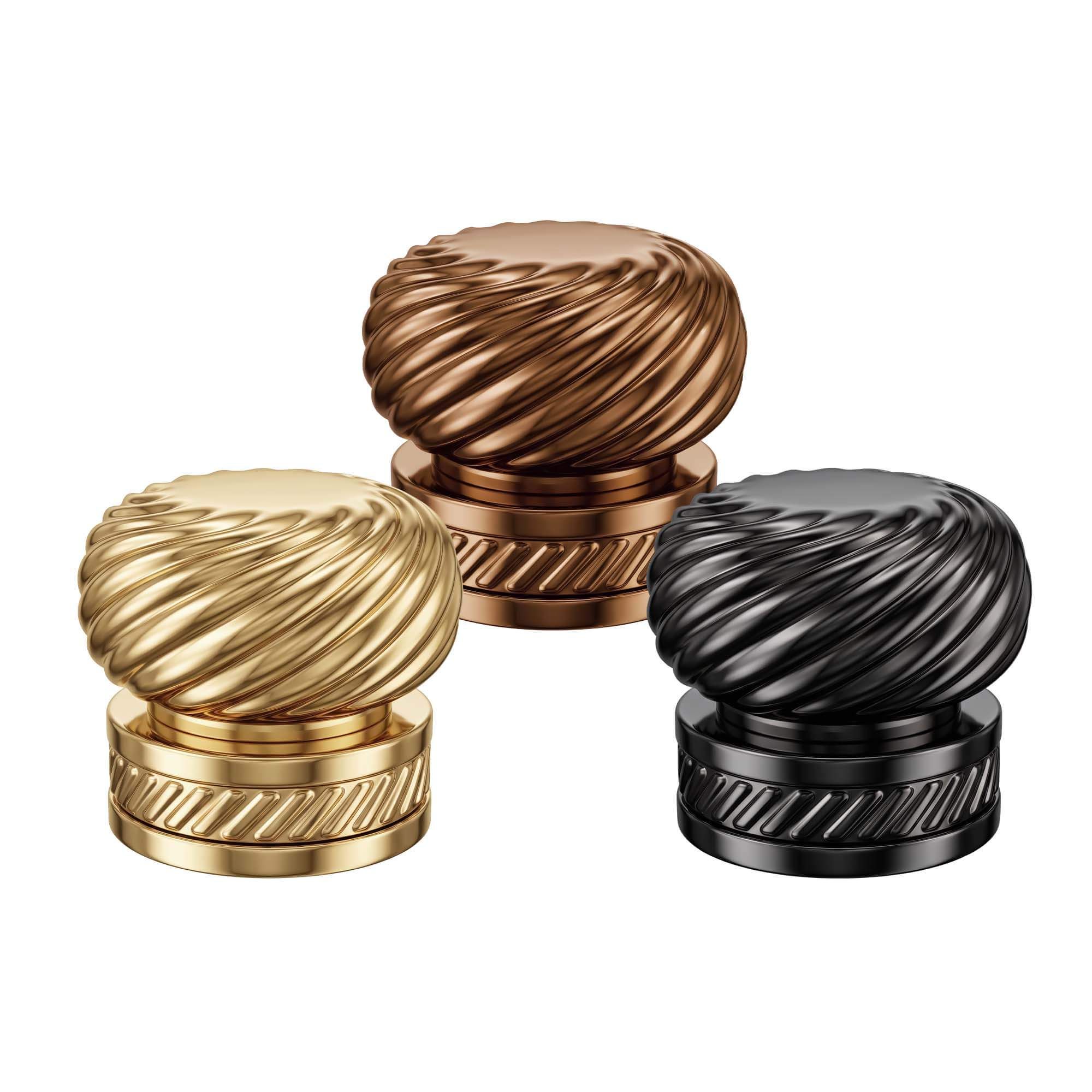
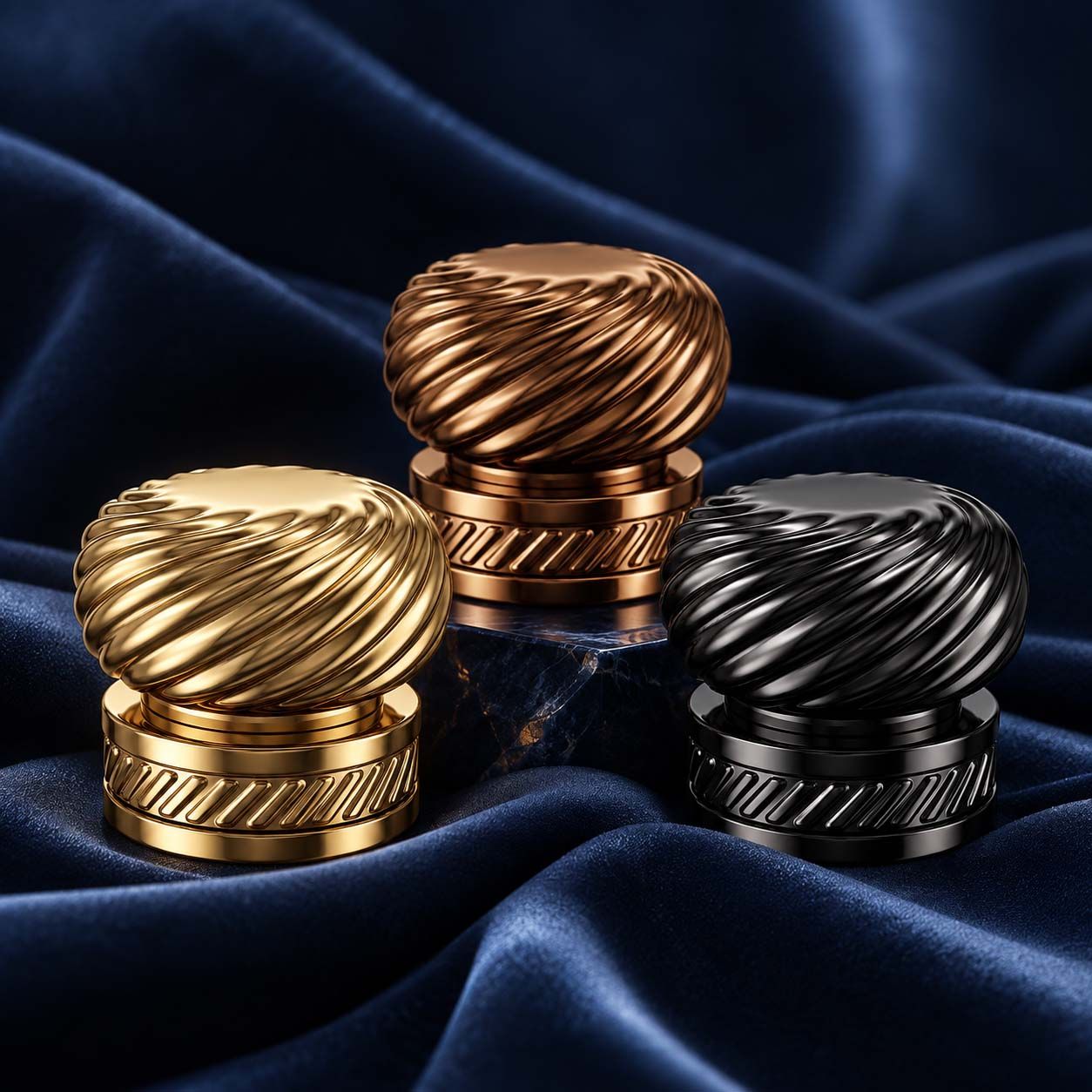
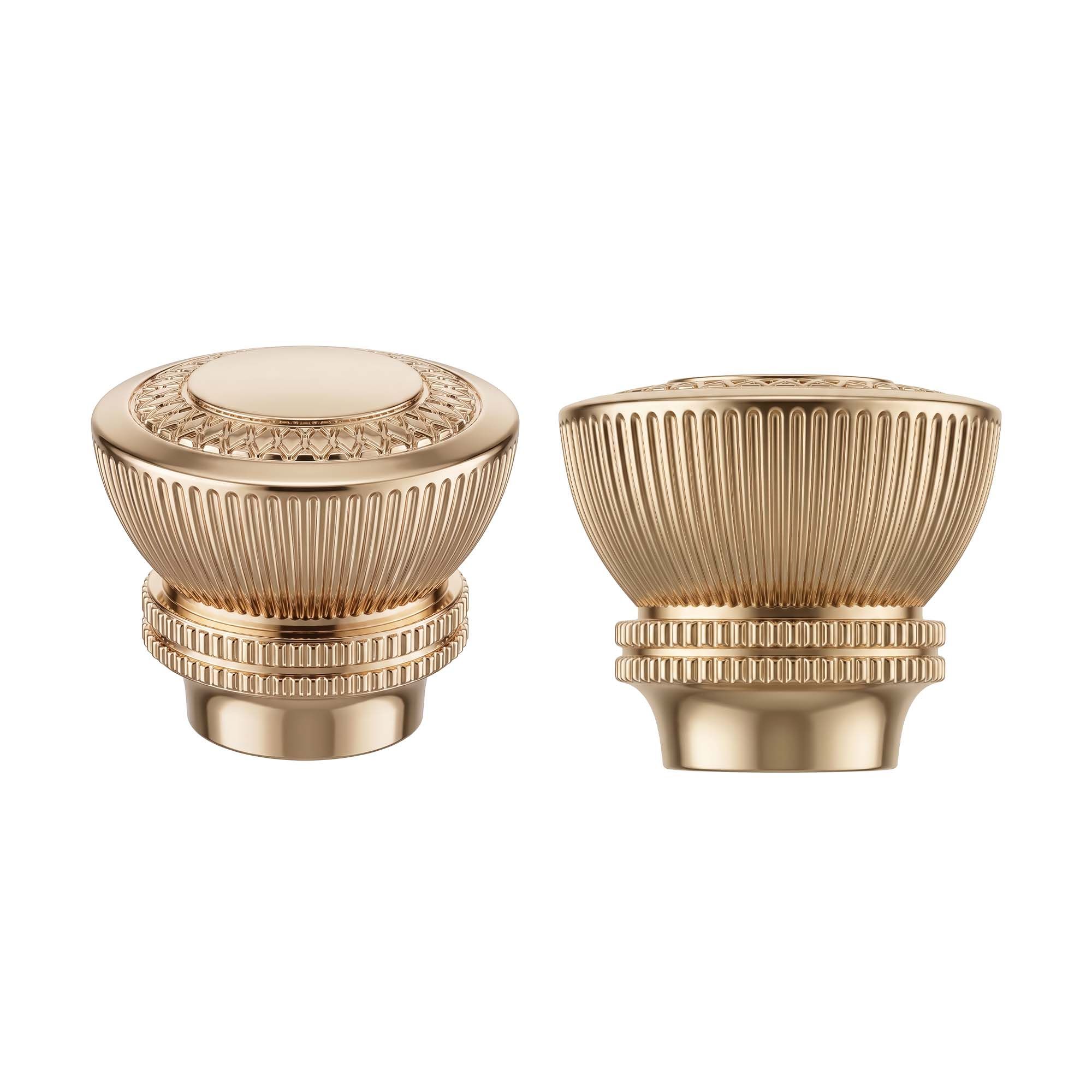
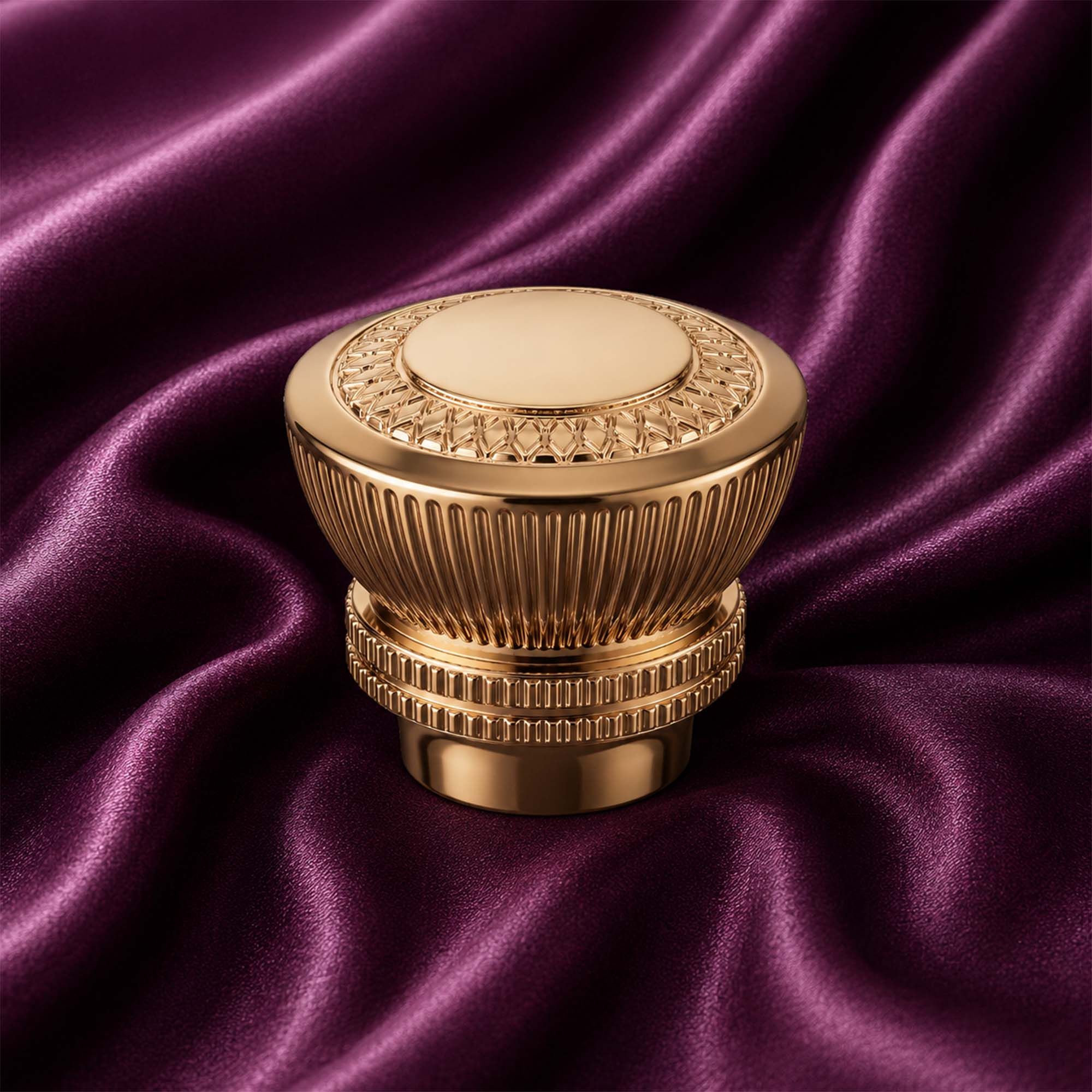
Zamak is a zinc alloy, cast and then plated or coated. It is heavy, takes a mirror finish well and gives the tight, dense sound associated with luxury fragrance. It is the most expensive of the common options and the heaviest to ship.
Aluminium is lighter, anodises into a wide colour range and machines cleanly. It gives a modern, brushed look and costs less than zamak.
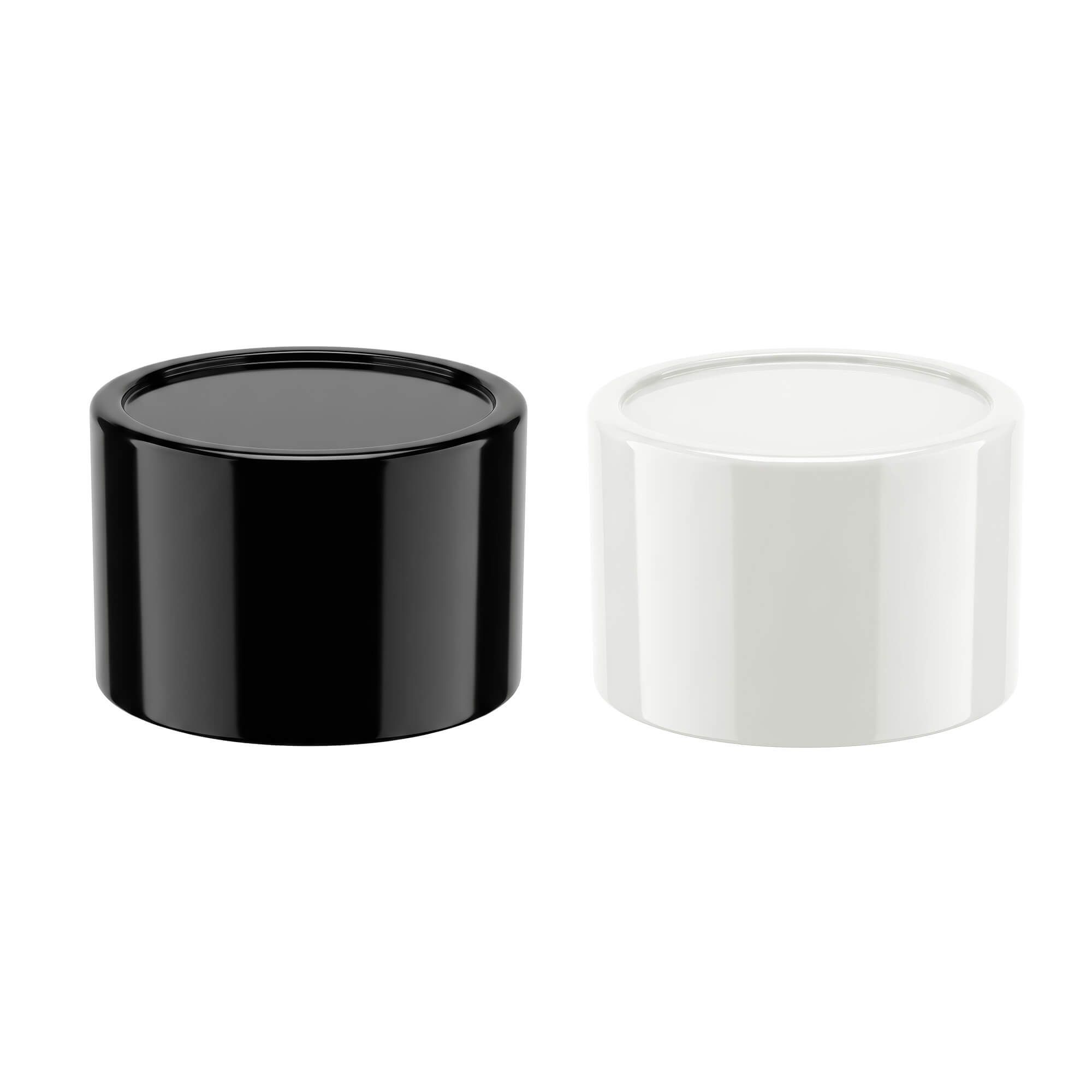
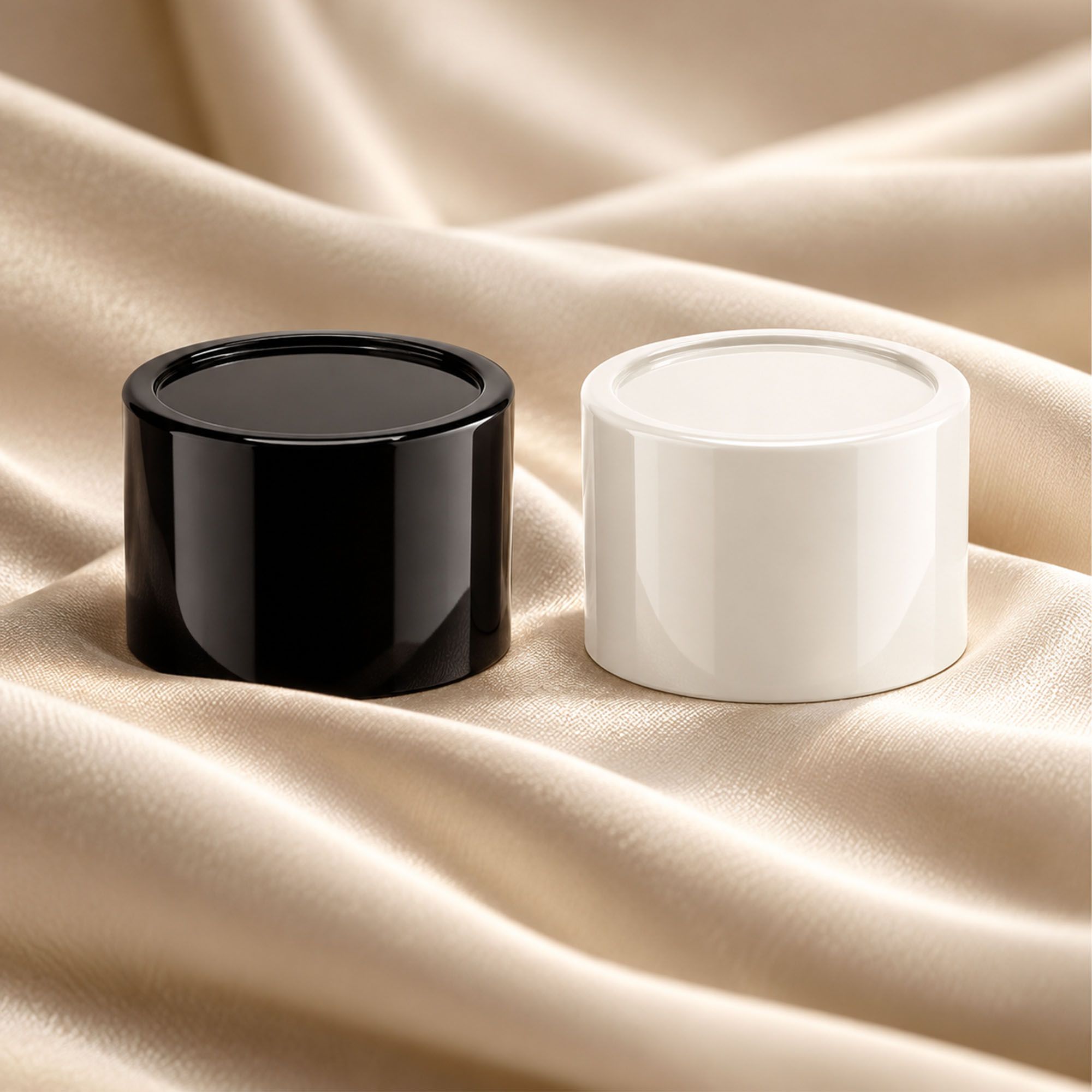
Surlyn is a transparent ionomer resin used for thick walled clear caps with a glass like appearance. It resists cracking better than acrylic and is common in mass fragrance.
Wood and coated plastic
Wood, usually a shell over a plastic insert, suits natural positioning. Grain varies between pieces, which some brands treat as a feature and others as a defect. Agree on this in advance.
Plastic caps with metallised or lacquered surfaces cover the volume end of the market at the lowest weight and cost.
Cap families across materials are on the perfume caps page.
Construction and why caps spin
Most metal caps are assembled from two parts: an outer decorative shell and an inner insert that does the actual gripping or threading. The two are bonded together.
When that bond fails, the cap turns freely without opening. This is the single most common cap complaint and it is a manufacturing issue rather than a user error.
Test for it at sample stage. Open and close the cap thirty to forty times, then check whether the outer shell has begun to rotate independently of the insert. A cap that survives this will survive a customer.
If you have a cap that already spins, lift upwards while turning. The pull locks the insert against the shell and transfers torque. Advice for other stuck cap situations is in our how to open a perfume bottle cap guide.
Fitting: what has to match
Three dimensions have to agree.
Three dimensions that have to agree
The neck finish, if the cap threads onto the bottle directly. Codes such as 15/415 or 18/410 specify both diameter and neck height, and a cap made for one will not seal on the other. The reference is in our neck finish and pump compatibility guide.
The collar diameter and height, if the cap fits over a crimped or screwed collar. Collars are supplied in matched families with the pumps, listed on the pump and collar page.
The shoulder profile of the bottle, if the cap is designed to sit flush against it. A cap that closes correctly but leaves an uneven gap against the shoulder looks like a defect even when nothing is wrong.
Buying the body, pump, collar and cap from one source removes most of this risk. When you split the order, send technical drawings in both directions and confirm in writing.
Decoration
Caps take the same surface processes as glass, with material specific limits.
Metal caps can be plated, anodised, painted and laser engraved. Plating gives the deepest mirror finish.
Surlyn caps can be moulded in colour, metallised on the inside surface so the shine is protected by the resin, or hot stamped.
Wood caps take engraving and printing but not high heat processes.
Hot stamping a logo onto a coloured cap is the most common brand mark and works across most materials.
Glass finishes follow the same production logic and are specified with the order rather than applied afterwards. The options are shown on the bottle finishes page.
Practical checks before approving a cap
Checks before approving a cap
Open and close it forty times and check for spinning or thread wear.
Fit it over the exact pump and collar you intend to ship with, not a similar one.
Drop the closed bottle onto a hard surface from waist height and see whether the cap stays on. Snap and magnetic caps fail this more often than screw caps.
Weigh it. Cap weight often exceeds bottle weight in luxury formats and it feeds directly into freight cost.
Check the coating against your formula. Fragrance that runs down the neck during use will reach the cap.
To match a cap to a specific bottle and pump combination, contact us through the contact page or try combinations in the configurator.